What to wear, how to read the room and why a versatile wardrobe is one of the most useful things a man can build.
There are few things more uncomfortable than arriving somewhere and realising you’ve misunderstood the occasion.
Perhaps you’ve worn jeans to a dinner where everyone else is in tailored trousers. Maybe you’ve arrived at a wedding in a shirt and chinos, only to discover the other guests are wearing suits. Or you’ve stood in front of your closet before an important event, unsure what works together, what the dress code means or whether anything you own is appropriate.
Dressing well isn’t an instinct reserved for a select few. It’s a skill developed through observation, experience and a willingness to learn. Yet many men reach adulthood without a dependable understanding of fit, dress codes or how to put together an outfit. It is easy to keep wearing familiar combinations without learning whether they suit the setting.
Advice from a partner, friend or tailor can help. Over time, aim to develop enough understanding to make those decisions yourself.
That doesn’t require an expensive wardrobe or an exceptional sense of fashion. It requires understanding what different occasions ask of you, choosing clothing that suits both the setting and your personality, and making an effort.
Taking care of your appearance is easier when you can connect the principles to a specific occasion.
Dressing Well Begins With Reading the Room
A good outfit isn’t simply a collection of attractive garments. It’s clothing that makes sense together, on the person wearing it, in the place they’re going.
A beautifully tailored suit can look out of place at a backyard barbecue. An excellent pair of jeans may still be the wrong choice for a formal wedding.
Before deciding what to wear, consider the venue, the people attending, the time of day and the purpose of the gathering. A birthday dinner at a neighbourhood restaurant calls for something different from an anniversary dinner at an upscale dining room. A job interview at a financial institution may have different expectations from one at a creative studio.
When an invitation includes a dress code, follow it. If it doesn’t, a quick look at the venue or a polite question to the host can eliminate uncertainty.
As a general rule, it’s often better to be slightly overdressed than noticeably underdressed. A sport coat can be removed if the room is more relaxed than expected. It is harder to make a very casual outfit suitable once you have arrived at a formal event. The aim is a small margin of polish, with the occasion still guiding the choice.
Clothing alone tells us very little about a person’s character. People have different resources, experiences, access needs and cultural expectations. Use this guidance to make your own choices thoughtfully while leaving room for circumstances you may not know about.
Understand the Dress Code
Dress codes become easier to navigate once you understand the broad distinctions. This table describes common contemporary Western conventions. It is a starting point; the host’s instructions, cultural dress and the setting take precedence.
| Dress code | A useful starting point |
|---|---|
| Casual | Jeans or chinos, a T-shirt or knitwear, and clean casual shoes. Adjust to the activity and weather. |
| Smart casual | Tailored trousers or neat dark jeans, a collared shirt or fine knit, and loafers or other considered shoes. Sneakers depend on the venue. |
| Business casual | Work-appropriate trousers, a collared shirt or knitwear, and suitable shoes. Jackets, jeans and sneakers depend on the workplace. |
| Cocktail attire | A suit, dress shirt and leather dress shoes. A tie is a dependable choice; check the invitation and setting. |
| Formal | Often a dark suit and tie or evening formalwear. The word is used inconsistently, so clarify rather than assuming. |
| Black tie optional | A tuxedo or a dark suit with a dress shirt, tie and leather dress shoes. |
| Black tie | A tuxedo, formal white shirt, black bow tie and suitable black formal shoes. |
| White tie | An evening tailcoat with matching trousers, white waistcoat and white bow tie, plus the prescribed formal shirt and shoes. Seek specialist fitting advice. |
The formalwear distinctions follow established etiquette guidance from the Emily Post Institute. The outfit combinations below are editorial suggestions to adapt to your circumstances.
With those distinctions in mind, here are six common occasions worth knowing how to dress for.
What to Wear for Different Occasions
1. A Nice Restaurant or Date
A good dinner outfit should feel considered without looking like a costume.
For an upscale restaurant, a collared shirt and tailored trousers provide a dependable foundation. Add a blazer when the venue calls for something more polished, or choose fine-gauge knitwear for a softer, less formal look.
A polished evening outfit:
- White or pale-blue cotton shirt, open at the collar
- Charcoal tailored trousers
- Navy blazer
- Dark brown leather loafers or Derby shoes
- Understated watch, if you wear one
A more relaxed alternative:
- Dark knit polo in navy, olive or chocolate brown
- Stone or taupe tailored trousers
- Brown suede loafers
- Optional lightweight jacket
The second combination works particularly well in warmer weather or at restaurants where a blazer would feel excessive.
Dark jeans can also work for a smart-casual dinner, provided they’re clean, well-fitting and free of heavy distressing. Pair them with a collared shirt or refined knit rather than an old T-shirt.
Pay attention to the details. Your shirt should be clean and pressed where appropriate. Shoes should be in good condition. Hair and facial hair should look maintained. Fragrance, if worn, should be restrained.
2. A Wedding
At a wedding, the invitation comes first.
A beach ceremony, a daytime garden wedding and a formal evening reception may require very different clothing. The couple may also specify colours, cultural attire or other expectations.
For a typical wedding requesting cocktail attire, a navy or charcoal suit is a dependable choice.
A classic wedding outfit:
- Well-fitting navy suit
- White dress shirt
- Burgundy, navy or subtly patterned tie
- Dark brown or black leather dress shoes
- Simple pocket square, if desired
For a summer wedding with a less formal dress code, a lightweight suit in medium blue, grey or an appropriate earth tone can work beautifully. Breathable fabrics such as lightweight wool or linen blends help in warmer weather.
For black tie, plan on a tuxedo with a formal white shirt, black bow tie and appropriate black formal shoes. Black tie optional permits a dark suit with a tie. If black tie is rare in your life, renting a complete, properly fitted ensemble may be more sensible than buying one.
A few details are worth remembering. Don’t assume that formal automatically means black tie. Avoid overly theatrical colours or accessories that compete with the couple. A white dress shirt with a dark suit is conventional in many Western weddings. An all-white suit or predominantly white ensemble is a different choice and is best avoided unless the couple requests or welcomes it.
If you’re uncertain about a cultural or religious expectation, ask rather than guess.
3. A Funeral or Memorial Service
Funerals are among the clearest examples of dressing with consideration for others.
In many Western traditions, subdued colours and conservative clothing are appropriate. A dark suit is a dependable choice, although customs vary considerably across cultures and religions.
A respectful traditional outfit:
- Charcoal, black or dark navy suit
- White or muted dress shirt
- Plain dark tie
- Black leather dress shoes
- Minimal accessories
Avoid loud patterns, bright statement pieces and anything that draws unnecessary attention.
If you don’t own a suit, dark tailored trousers, a subdued collared shirt and clean, understated shoes are a reasonable alternative in many settings. A dark sweater or jacket can add formality where appropriate.
Most importantly, follow the family’s wishes. Some memorial services are intentionally informal or ask guests to wear a particular colour. Those instructions take precedence over convention.
Your presence matters more than your clothing. Dressing respectfully is simply one way of showing consideration.


4. A Job Interview
What you wear to an interview should reflect the workplace you’re hoping to join.
A traditional corporate employer may expect a suit and tie. A design agency or technology company may have a more relaxed dress code.
Research the organisation beforehand. Look at how employees present themselves in professional settings, and ask the recruiter if you’re unsure.
For a traditional corporate interview:
- Navy or charcoal suit
- White or light-blue dress shirt
- Conservative tie
- Polished black or dark brown dress shoes
For a smart-casual workplace:
- Mid-grey tailored trousers
- Light-blue Oxford shirt
- Navy sport coat
- Brown leather loafers or Derby shoes
For a more casual creative environment:
- Dark, well-fitting chinos
- Fine-gauge knit polo or Oxford shirt
- Clean minimalist leather sneakers or loafers
- Optional casual jacket
Even in a relaxed workplace, avoid clothing that is visibly worn, heavily wrinkled or distracting.
Try the outfit on before interview day. Make sure you can sit comfortably, your jacket doesn’t pull across the chest and your trousers fall properly over your shoes.
You should be thinking about the conversation, not adjusting your clothing throughout it.
5. Business Casual
Business casual is one of the most misunderstood dress codes because its meaning changes from workplace to workplace.
In a conservative office, it may mean dress trousers and a collared shirt without a tie. In a relaxed workplace, dark jeans and clean sneakers might be acceptable.
A useful approach is to begin with polished basics and adjust to the environment.
A dependable business-casual outfit:
- Olive or navy chinos
- White or pale-blue Oxford shirt
- Brown leather loafers
- Optional navy blazer
A more contemporary alternative:
- Charcoal wool trousers
- Fine-gauge cream or navy sweater
- Dark brown suede Derby shoes
- Unstructured jacket, if needed
Business casual doesn’t have to mean wearing a button-down shirt every day. Knit polos, merino sweaters and textured jackets offer variety while maintaining a professional appearance.
The goal is to look capable and comfortable in your environment, without dressing more formally than the situation requires.
6. Casual Weekends and Social Gatherings
Casual is where personal style has the most room to develop.
A simple outfit can look excellent when the proportions work and the clothing is well maintained.
A relaxed weekend outfit:
- Dark straight-leg jeans
- White or cream heavyweight T-shirt
- Olive overshirt or suede jacket
- Clean leather sneakers
A slightly more refined alternative:
- Stone chinos
- Navy knit polo
- Brown suede loafers
- Lightweight jacket for cooler weather
For colder months:
- Dark denim
- Charcoal or oatmeal crewneck sweater
- Wool overcoat or casual wool jacket
- Leather boots
None of these combinations requires formal clothing. They rely on good fit, compatible colours and garments that look cared for.
Try the outfit as a whole before leaving. The right trouser length, a clean pair of shoes and a layer that sits comfortably can make simple clothing feel considered.


Build a Wardrobe That Works Together
This is the principle behind a capsule wardrobe: a considered collection of versatile garments that can be combined to create outfits for different situations.
A navy blazer should work with more than one pair of trousers. A good Oxford shirt should look natural with jeans, chinos and wool trousers. A fine-gauge sweater should work on its own or beneath a jacket.
Build Around Your Actual Life
Someone working in a formal office five days a week may need several suits and dress shirts. Someone who works remotely may benefit more from good casual clothing, a few smart-casual combinations and one dependable formal outfit.
Climate matters too. Lightweight layers and breathable fabrics are useful in warmer regions, while substantial knitwear, outerwear and weather-appropriate footwear deserve more attention in colder places.
Don’t build a wardrobe for a lifestyle you imagine having someday. Build one that supports the life you actually lead, with enough flexibility for the occasional wedding, interview or important dinner.
A Versatile Starting Point
For a man whose life includes casual days, dinners, professional settings and occasional formal events, consider this foundation:
| Category | Useful pieces |
|---|---|
| Everyday tops | White and navy plain T-shirts; white and light-blue Oxford shirts |
| Knitwear | Cream crewneck sweater; navy knit polo |
| Trousers | Dark indigo jeans; charcoal wool trousers; stone or olive chinos |
| Jackets | Navy sport coat; olive or brown casual jacket |
| Footwear | Clean understated sneakers; brown loafers; dark dress shoes |
| Formal option | Well-fitting navy or charcoal suit, if your occasions warrant one |
This isn’t a shopping list to complete immediately. It’s an example of how relatively few pieces can cover a useful range of situations.
You may already own much of it. Add everyday essentials and weather protection according to your laundry schedule and climate. If you need a suit, include a dress shirt and tie as well; an Oxford shirt and a sport coat do not cover every formal requirement.
One Wardrobe, Multiple Looks
Consider how the same garments can be rearranged:
| Occasion | Outfit |
|---|---|
| Weekend coffee | White T-shirt + dark jeans + casual jacket + sneakers |
| Casual date | Light-blue Oxford + dark jeans + brown loafers |
| Dinner out | Navy knit polo + charcoal trousers + brown loafers |
| Business casual | Light-blue Oxford + stone chinos + navy sport coat + loafers |
| Upscale restaurant | White Oxford + charcoal trousers + navy sport coat + dress shoes |
| Relaxed gathering | Cream sweater + dark jeans + casual jacket + sneakers |
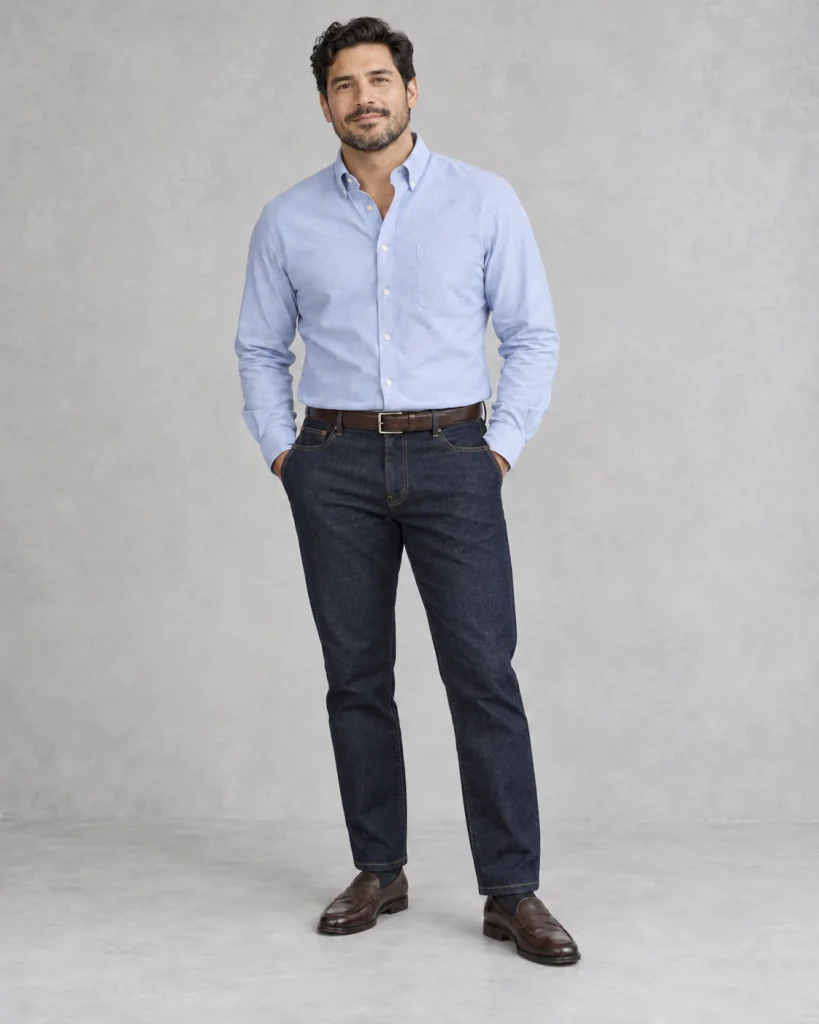


A T-shirt and jeans can feel more polished with an unstructured sport coat and loafers, provided the jacket’s fabric and shape suit casual clothing. Tailored trousers become more relaxed when paired with a knit polo rather than a dress shirt and tie.
There are limits. A sport coat and trousers do not replace a suit when the dress code requires one, and a standard suit does not replace black tie. A capsule wardrobe should prepare you for real occasions, not encourage you to ignore their expectations.
The Details That Make Clothing Work
You don’t need to become a menswear expert overnight. A few fundamentals will improve nearly everything you wear.
Fit Comes First
A garment doesn’t have to be tight to fit well.
Your jacket should sit cleanly across your shoulders without obvious pulling. A shirt should allow comfortable movement without straining at the buttons. Trousers should sit securely and fall neatly, with a length appropriate to their cut and the shoes you are wearing. Sit down, reach forward and walk in the outfit; comfort in motion matters as much as its appearance in a mirror.
When buying a tailored jacket, prioritise the shoulders and overall length. Sleeve and trouser hems are often more straightforward alterations, though the garment’s construction affects what is possible. Ask a tailor before assuming a poor fit can be fixed cheaply.
Different silhouettes can all look intentional. Relaxed trousers aren’t automatically poorly fitted, just as slim trousers aren’t automatically more refined.
What matters is proportion, comfort and whether the garment looks like a deliberate choice.
Shoes Change the Entire Outfit
Footwear can move an outfit toward casual or formal more quickly than almost any other piece.
Dark jeans with clean sneakers feel relaxed. The same jeans with suede loafers become more polished.
Charcoal trousers with suede loafers feel different from the same trousers worn with polished leather lace-ups. Consider material and shape as well as the shoe’s name: a slim, plain Derby generally looks dressier than a chunky version with a heavy sole.
For traditional tailored outfits, black shoes are particularly useful with charcoal and black suits, and also work with navy. Dark brown shoes pair well with navy, medium grey and many earth tones. If you wear a leather belt, keeping it broadly in the same colour family as your shoes is an easy starting point.
You don’t need a large shoe collection. You need a few pairs that suit different levels of formality and are kept in good condition.
Choose Colours That Work Together
A wardrobe built around compatible colours is easier to use.
Navy, charcoal, grey, cream, white, olive, brown and muted blue offer a flexible foundation. You can add burgundy, forest green, rust or other colours you enjoy without making every outfit difficult to coordinate.
A navy jacket works with grey trousers, stone chinos and dark jeans. A cream sweater pairs naturally with charcoal, olive, navy and denim.
Once those combinations become familiar, getting dressed takes less thought.
Maintain What You Own
Good clothing loses much of its appeal when it’s neglected.
Clean your shoes using methods appropriate to their material. Replace missing buttons, follow garment care instructions, and steam or press only where the fabric permits it. Store jackets on supportive hangers and repair small problems before they worsen.
And when you buy something new, consider whether it complements the wardrobe you’ve already built.
An expensive jacket that works with only one outfit may be less useful than a modestly priced one you can wear in several settings.
Invest Thoughtfully, Not Constantly
Some investments are financial. A good alteration can improve how trousers fit. A well-made pair of shoes may be worth repairing rather than replacing. A versatile suit can serve you through years of important occasions if it fits properly and is cared for.
Other investments require attention rather than money.
Learning how to coordinate colours costs nothing. Neither does preparing an outfit the night before an event, keeping your shoes clean or understanding the dress code before you arrive.
Start with the gaps that matter most in your life. If you frequently attend professional meetings, prioritise dependable work clothing. If your wardrobe is full of casual pieces but you struggle with dinners and events, a good pair of tailored trousers and appropriate shoes may make more difference than another jacket.
Develop Your Own Judgment
No guide can account for every restaurant, workplace, celebration or personal preference.
Eventually, you have to make decisions for yourself.
You’ll discover which fits suit you, which combinations feel natural and how much formality is appropriate in the places you frequent. You’ll learn when a blazer adds something to an outfit and when it’s better left at home.
Ask your partner or a trusted friend for an opinion when you want one. Use the advice to learn why an outfit works, so that the next decision becomes easier to make yourself.
A good wardrobe gives you options. Good judgment helps you choose between them.
Before your next event, check the invitation, choose a complete outfit and try it on with the shoes you intend to wear. Handle any cleaning or alterations while there is still time. That small rehearsal gives you a chance to arrive comfortable, prepared and ready to enjoy the occasion.
Know how to show up well in the clothes you have.