
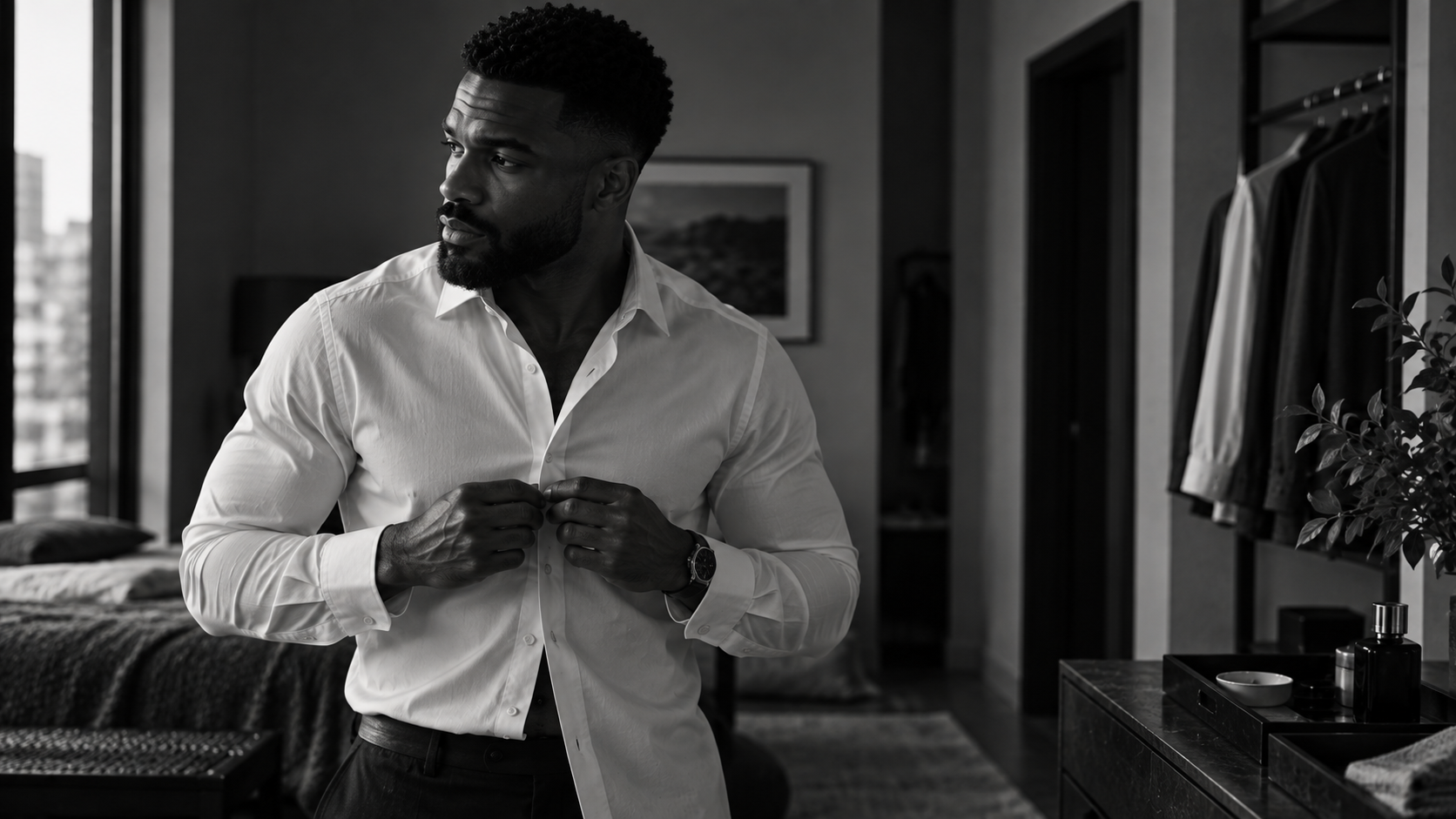
Why presentation is less about vanity than how you choose to show up
Your appearance introduces you before you have the opportunity to introduce yourself.
That may seem superficial, but it is part of being human. Before someone knows your character, your sense of humor, your competence or your intentions, they notice something about how you present yourself.
The clothes you wear. The condition they’re in. Your grooming. Your posture. Whether you appear to have given any thought to the occasion.
None of these things can tell someone who you are. They shouldn’t be treated as measures of a man’s worth, either. But they do communicate something.
Taking care of your appearance says, at the very least, that you were paying attention.
For some men, appearance can feel like an uncomfortable subject. Pay too much attention to it and it can drift into vanity. Pay too little and it can be mistaken for authenticity, as though putting effort into how you look somehow makes you less secure in who you are.
There is a healthier place between those extremes.
Taking care of yourself does not require being consumed with yourself.
It requires care.
The Discipline of Maintenance
Most of looking well put together is remarkably ordinary.
You shower. You take care of your teeth. You find a haircut that suits you and maintain it. You shave or keep your facial hair intentional. You establish a simple skincare routine. You wear clean clothes that fit properly. You take care of your shoes. You exercise and pay attention to your health.
Then you do it again tomorrow.
There is nothing particularly glamorous about any of this. That’s partly why it matters.
Grooming is maintenance, and maintenance requires consistency.
A bathroom cabinet full of expensive products won’t compensate for habits you rarely follow. Neither will a designer wardrobe compensate for clothing that doesn’t fit, shoes that have been neglected or basic grooming you’ve ignored.
The details are often less important than the routine itself.
A few sensible habits, followed consistently, become a standard for how you take care of yourself.
We tend to maintain the things we expect to serve us well for a long time. Our own wellbeing deserves that same attention.
Appearance and Presence
There is a particular kind of confidence that can come from walking into a room knowing you have presented yourself well.
Not because you’re wearing the most expensive jacket in it or because everyone is looking at you. Ideally, neither matters very much.
You simply know you’ve taken care of the things within your control.
Your clothes fit. Your grooming is handled. You dressed appropriately for where you’re going. You can stop thinking about yourself and turn your attention to the room.
That is an underrated benefit of taking care of your appearance.
Good presentation can become less about attracting attention and more about removing distraction.
When you’re comfortable with how you’ve chosen to present yourself, you can spend less time adjusting your shirt, wondering whether you’re underdressed or thinking about how you compare with everyone else.
You can simply be present.
Appearance matters. It just doesn’t matter most.
It cannot make someone interesting, trustworthy or competent. But it does form part of the context in which other people encounter those qualities.
A thoughtful appearance can signal that you understood the setting and made an effort to meet it.
How You Dress Isn’t Only About You
Imagine being invited to someone’s wedding and arriving in something you’d wear to run errands.
The issue isn’t that you’ve violated an arbitrary fashion rule. It’s that someone considered the day important enough to gather the people they care about, and your presentation suggests you didn’t give the occasion the same consideration.
The principle works in less formal situations too.
Dressing appropriately for a job interview acknowledges the seriousness of the opportunity. Making an effort for a date can show that the evening matters to you. Presenting yourself thoughtfully at work can demonstrate an understanding of the environment you’re part of.
This doesn’t mean wearing a suit everywhere or becoming preoccupied with dress codes.
Sometimes the appropriate thing to wear is a T-shirt, shorts and sneakers.
Knowing the difference is part of dressing well.
Style is often described as self-expression, and it certainly can be. But mature style also requires an awareness that we don’t exist in isolation.
How we present ourselves can be both personal and considerate.
Taking Care of Yourself Without Chasing Perfection
There is an important boundary here.
A healthy interest in appearance can become something less useful when maintaining yourself turns into constantly correcting yourself.
The trouble begins when taking care of yourself starts to feel like constantly fixing yourself. There will always be another product, treatment or trend promising some version of improvement. You don’t have to pursue all of it.
The objective isn’t perfection.
It’s learning what care looks like for you.
Look after your health. Maintain your grooming. Learn what clothing suits you. Take care of the things you own. Improve what reasonably can be improved without treating yourself as a problem that constantly needs solving.
This is also where appearance connects to wellness.
Exercise, sleep, nutrition, hygiene, dental care and skincare can all influence how we look, but their value extends much further than the mirror. Looking after yourself should support a healthier life rather than exist solely in service of appearance.
You can care about looking good without believing looking good is the most important thing about you.
Develop Your Own Standard
The internet can make personal style feel more complicated than it needs to be.
There is always something new to buy, wear or add to your routine.
You don’t need all of it.
A useful grooming routine may contain surprisingly few products. A good wardrobe doesn’t require hundreds of pieces. Looking put together doesn’t require luxury labels.
What matters more is developing a standard you can actually maintain.
Find a grooming routine that works for you. Understand how your clothes should fit. Keep them in good condition. Learn what you feel comfortable wearing. Own enough appropriate clothing that getting dressed for an important occasion doesn’t become a crisis.
Then allow your preferences to evolve.
Personal style is called personal for a reason. The objective isn’t to reproduce someone else’s wardrobe. It’s to become increasingly comfortable with how you choose to present yourself.
Often, the men who dress well aren’t the ones wearing the most noticeable clothes. They’re the ones who appear completely at ease in them.
Care Is Visible
None of this proves character.
A perfectly tailored suit cannot make someone honorable. A disciplined grooming routine cannot make someone dependable. Good taste cannot make someone interesting.
Character is built elsewhere.
But the way a man cares for himself can still be one expression of the standards he chooses to maintain.
There is discipline in doing ordinary things consistently. There is self-respect in caring for your health and presentation. There is consideration in recognizing when an occasion deserves effort.
There is confidence in deciding how you want to present yourself without requiring everyone else to approve of it.
That’s the case for caring about appearance.
Not to impress every room you enter.
To enter it knowing you’ve taken care of yourself, respected the occasion and can now give your attention to something more important than how you look.
Presentation isn’t vanity. It’s care.