
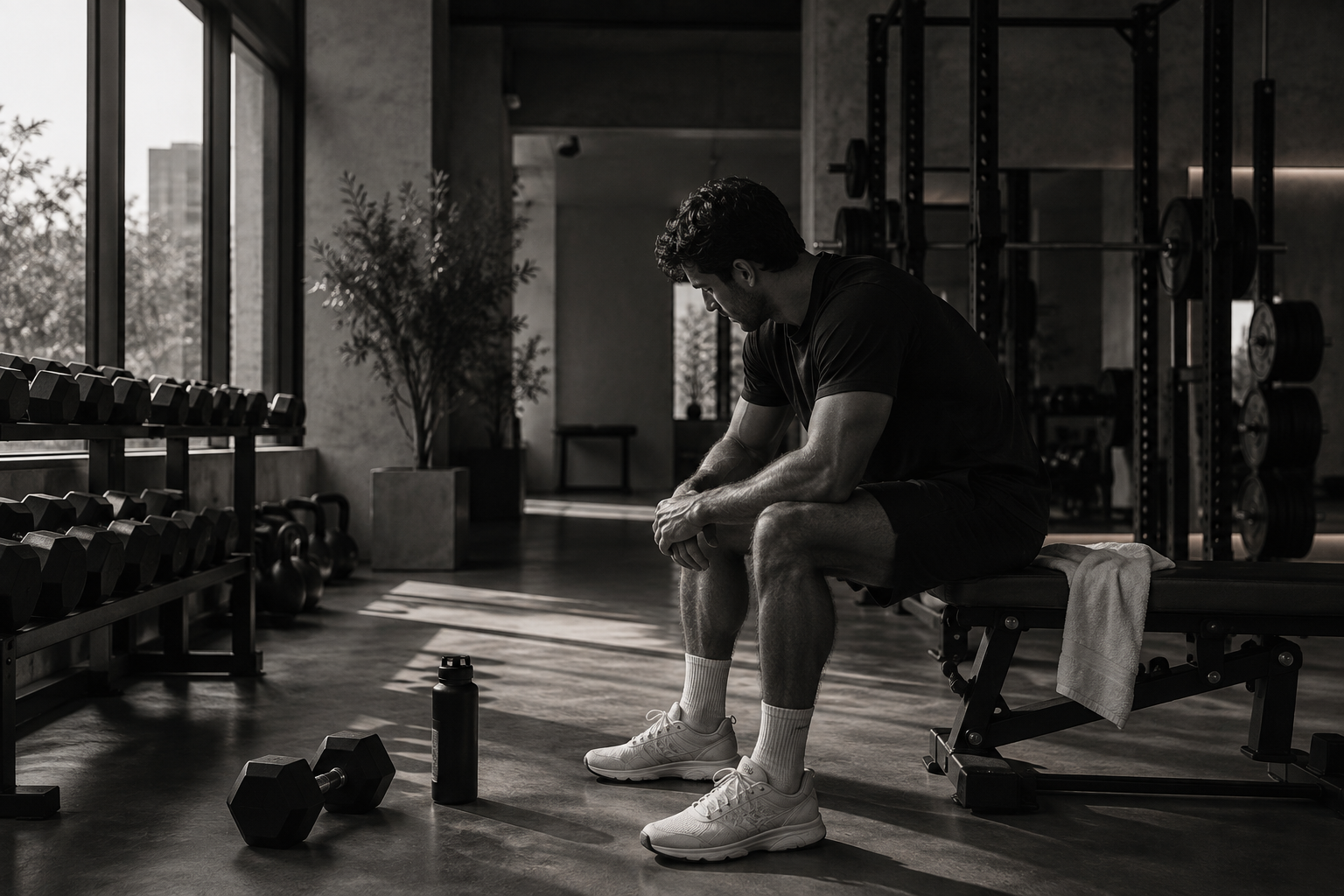
What it means to be a strong man today
Life will test whatever strength we think we possess.
Sometimes the test is obvious: a difficult season at work, a relationship under strain, a family member who needs you, a plan that falls apart. Other tests are quieter. Keeping a commitment when motivation has disappeared. Controlling your temper when you’re frustrated. Staying clearheaded when everyone around you is losing theirs.
Strength matters in those moments.
For men, strength has traditionally been easy to picture. It is physical, visible and measurable. How much can you lift? How hard can you work? How much discomfort can you tolerate?
Physical strength still matters. Men should build it and make an effort to preserve it as they age. But that’s an incomplete definition of a strong man.
Strength is also the ability to remain composed when circumstances become chaotic. It is being someone others can depend on without believing you must carry everything alone. It is having enough command of your emotions to express them without being controlled by them.
At its best, strength isn’t about dominance.
It’s about capacity.
Start With the Body
There is something refreshingly straightforward about lifting a weight.
You apply resistance. You control it. You recover. Then you come back and do it again.
Over time, the body adapts.
The case for doing this regularly is strong. The World Health Organization recommends adults perform muscle-strengthening activities involving all major muscle groups on at least two days each week, alongside aerobic physical activity.
The reason to train goes well beyond appearance.
Strength is part of what allows us to move through life capably: carrying groceries, climbing stairs, lifting a suitcase, doing physical work and continuing to participate in the activities we enjoy. These abilities are easy to take for granted when we’re young. Preserving them becomes increasingly valuable with age.
Research in older adults supports resistance training for improving muscular strength and physical function. There is also encouraging evidence that the benefits may extend beyond the muscular system. A recent systematic review and meta-analysis of randomized trials in adults aged 60 and older found improvements in overall cognition and several measures of memory, although benefits were not found across every cognitive domain.
That distinction matters. We can’t say lifting weights prevents cognitive decline. The evidence does suggest resistance training may support certain aspects of cognitive health as we age.
There is nothing wrong with wanting to look better, either. Wanting to look and feel better can be a perfectly reasonable reason to train. But appearance is only one reason to train.
The larger goal is capability.
What Training Teaches Us
Spend enough time training and you discover that getting stronger is rarely dramatic.
There are hard workouts and satisfying personal records, but most progress is built during ordinary sessions that nobody else will ever know happened.
You arrive. You warm up. You do the work. You pay attention to your technique. You leave.
A few days later, you return.
We tend to celebrate transformation while paying much less attention to repetition. The before-and-after photograph gets the attention. The months of ordinary Tuesdays that produced it don’t.
But those Tuesdays are where the work happened.
Training asks for patience because meaningful progress takes time. It asks for thoughtfulness because doing more isn’t always the same as doing better. It asks for discipline because motivation inevitably comes and goes.
This is one reason consistency matters so much. One hard workout followed by weeks of inactivity accomplishes little. Strength is accumulated through regular work.
And that principle travels surprisingly well beyond the gym.
Careers aren’t built in one exceptional day. Relationships aren’t sustained by one grand gesture. Knowledge isn’t acquired from reading one book. Much of a worthwhile life is built through useful things done repeatedly.
Missing a workout doesn’t erase months of progress, just as one difficult week doesn’t erase years of good habits. Life will interrupt us. The important skill is learning how to return.
The gym simply gives us a place where that process is unusually easy to see.
Composure Under Pressure
Eventually, life presents problems that cannot be solved in the weight room.
Someone you care about struggles. You receive bad news. A decision doesn’t work out as planned. Anger, fear or frustration enters the picture.
This is where another kind of strength becomes important.
Mental strength is not pretending those things don’t affect you. It is maintaining enough composure to decide what happens next.
Being calm doesn’t mean being indifferent. Feeling anger isn’t weakness. Neither is fear, disappointment or uncertainty. The question is what you do with them.
Can you experience anger without letting it decide how you treat someone? Can you receive difficult news, take a moment and think before reacting? Can you remain useful when a situation becomes chaotic?
That composure affects more than you.
Most of us know what it feels like to be around someone who makes a difficult situation worse. We also know the opposite: the person whose presence makes things feel a little more manageable.
Strength should make us steadier, not harder to be around.
Emotional Strength Belongs in the Definition
There is value in stoicism properly understood: perspective, self-command and the ability to endure discomfort.
But emotional suppression is not the same thing as emotional control.
A modern definition of male strength should make room for that distinction.
Emotional strength requires enough self-awareness to recognize when stress is affecting your behavior, when frustration is becoming anger, or when something you’ve been dismissing actually needs your attention.
Sometimes strength means maintaining your composure because the moment requires it.
Sometimes it means being able to say, I’m having a difficult time with this.
A man can be resilient and vulnerable. He can be dependable and still need support himself. Those qualities don’t cancel each other out.
The same applies to how we respond to other people. Being dependable doesn’t always mean having the solution. Sometimes a friend, partner or family member simply needs somewhere safe to talk.
Listen. Resist the urge to immediately fix the problem. Give the conversation enough room to exist.
And when you’re the one who needs that conversation, have enough security to allow someone else to do the same for you.
Build Capacity
There is no shortage of messages telling men what strength is supposed to look like.
More muscle. More money. More status. More certainty.
There is a better question:
What are you becoming capable of?
Build physical strength so your body remains capable. Build mental strength so difficulty doesn’t immediately take command of your judgment. Build emotional strength so you can communicate, listen and remain present when things become uncomfortable.
A strong man can be relied upon, but he also understands his limits. He can support others without assuming every problem is his to solve. And when he needs help himself, he is secure enough to ask for it.
The weight room offers a useful reminder of how this happens.
Strength isn’t something you announce. It is accumulated.
One repetition doesn’t change you very much. Neither does one moment of patience, one difficult conversation handled well or one promise kept.
But then you do it again.
And again.
Eventually, those repetitions become something.
Life will continue to apply resistance. That part is unavoidable.
The question is whether we’re building the capacity to meet it.
That is strength for life.
Evidence & Further Reading
The health claims in this article draw from public-health guidance and peer-reviewed research.
World Health Organization — Physical Activity Recommendations — Guidance on physical activity and muscle-strengthening exercise for adults.
Resistance Exercise and Cognitive Function in Older Adults — Systematic Review and Meta-analysis — Analysis of 17 randomized controlled trials examining resistance exercise and cognitive outcomes in adults aged 60 and older.
Resistance Exercise and Depressive Symptoms — Meta-analysis of Randomized Clinical Trials — Analysis of 33 randomized trials examining resistance exercise and depressive symptoms.
Resistance Exercise and Anxiety — Meta-analysis of Randomized Controlled Trials — Analysis examining resistance exercise and anxiety symptoms across randomized controlled trials.
Gentleman Defined provides general educational information about wellness. It is not individualized medical advice.